
The question keeping every professional awake at night isn’t if AI can do their job, but when will it happen? The discourse surrounding Artificial Intelligence has reached a fever pitch. Every day, it seems there’s a new, more powerful tool capable of writing code, drafting legal documents, designing marketing campaigns, and crunching financial data in seconds. Naturally, this explosive growth has triggered a wave of fear: Are AI tools a fundamental threat to human jobs, or merely catalysts for the next great professional evolution?
It’s a complex question that requires moving beyond the sensational headlines and diving into the mechanics of job displacement, the nuances of augmentation, and, crucially, the inherent risks that come with wholesale dependence on these powerful, yet imperfect, technologies.
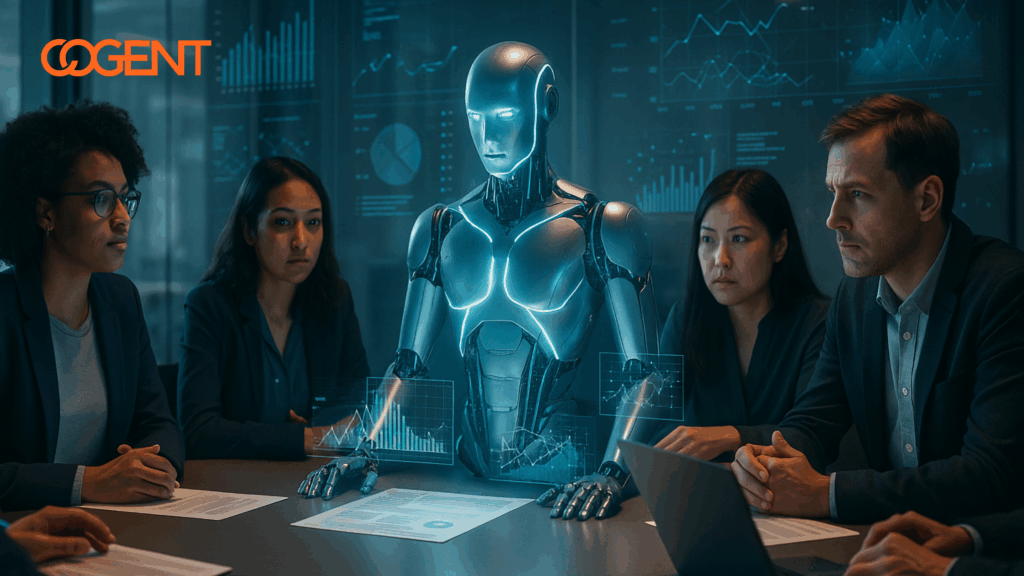
The Automation Axiom: Where the Job Threat is Concrete
The initial waves of AI anxiety focused on blue-collar roles and repetitive manufacturing tasks. Today, the conversation has moved squarely into the white-collar office space, disrupting roles previously considered safe due to their reliance on abstract thinking and complex data synthesis.
We are witnessing AI tools automate what we might call “intermediate steps”—the research, the first draft, the data cleaning, and the basic coding structure. For roles heavily reliant on these repeatable cognitive tasks, the threat is real and immediate. Content writers, customer service representatives, data analysts, and paralegals are finding that AI can handle 60% to 80% of their daily workload, drastically reducing the demand for raw human hours.
Perhaps the most revealing signal comes from the highest echelons of knowledge work. As reported by Semafor, even major players in the consulting world are feeling the heat. A Deloitte AI “slip-up”, where the firm provided a client with inaccurate, AI-generated information, exposed two key vulnerabilities. First, that even highly paid, complex advisory roles are being aggressively automated. Second, it demonstrated the risk inherent in this automation: if a leading global consulting firm, with all its resources and oversight, can make a costly AI mistake, what does that mean for smaller firms and individual professionals? It signals that the need for human oversight is not diminishing, but the volume of humans required for the initial output certainly is.
This is the AI axiom: Any job component that is predictable and based on pattern recognition is now vulnerable to total automation.
The Augmentation Argument: The View from Yale
While the threat is undeniable, many experts argue that the narrative of mass job annihilation is overblown. Historically, technological revolutions, from the printing press to the personal computer—have always shifted work, not destroyed it. A recent Yale study, highlighted by the Search Engine Journal, supports this nuanced perspective, suggesting that rather than eliminating jobs, AI is primarily an augmentative tool.
The study posits that AI tools do not simply erase roles; they dramatically increase the productivity of the human worker. For instance, a graphic designer using AI to generate ten variations of a logo in minutes is far more productive than one who must sketch them manually. This heightened efficiency means two things:
- New Value Creation: Companies can now afford to pursue previously unfeasible projects, leading to new roles focused on higher-level strategic implementation and AI management.
- Focus on Uniquely Human Skills: As AI handles the routine, human workers are liberated to focus on tasks that require true ingenuity: critical thinking, complex problem-solving, emotional intelligence, negotiation, and ethical judgment.
In this view, the “threat” isn’t to the human worker itself, but to the skillset of the human worker. The job title may remain the same, but the required skills shift from execution to expertise, from knowledge acquisition to ethical interpretation.
The Perils of the AI Power Switch: Challenges and Dependence
Even if AI primarily augments rather than annihilates, a complete, uncritical dependence on these tools introduces significant operational and professional risks. To rely entirely on AI is to willingly adopt its inherent limitations.
1. The Reliability Crisis: Hallucination and Accuracy
The most notorious limitation of current large language models (LLMs) is hallucination—the phenomenon where the AI confidently generates false or nonsensical information. For knowledge workers, this is more than an annoyance; it is an existential liability.
As the Deloitte slip-up demonstrates, when AI tools are deployed for critical advisory work, the cost of inaccuracy is measured in lost client trust and financial damage. The user is always responsible for the output, but with AI handling the intermediate steps, the human review process becomes less about verifying the reasoning and more about fact-checking the very foundation of the work.
2. Data Blindness and IP Risk
The power of AI tools is based on the data they ingest. When a company relies on public-facing LLMs for internal research or development, they risk two critical security breaches:
- Proprietary Data Leakage: Submitting proprietary or confidential client data into a third-party AI model may violate internal policies and client contracts, effectively surrendering sensitive information to a third-party server.
- Source Blindness: AI models often obscure the origins of their training data, leading to outputs that may contain copyrighted material or biased information, creating unexpected legal and ethical liabilities for the relying organization.
3. The Risk of Skill Atrophy
Perhaps the greatest long-term threat is psychological and professional: the atrophy of human expertise.
If a financial analyst stops performing manual data modeling because AI generates the initial draft, that analyst quickly loses the fundamental understanding of the model’s limitations and biases. If a writer always lets AI generate the first draft, they lose the ability to grapple with a blank page and find their unique voice. Complete dependence on AI risks creating a generation of “prompters” who can tell the machine what to do but lack the foundational skills to critically evaluate, diagnose, and fix the machine’s output.
As we delegate routine cognitive tasks, we risk losing the deep, intuitive understanding that is born only from manual effort and experience. This loss of primary expertise makes the human worker brittle and incapable of functioning if the AI tool fails or is unavailable.
Conclusion: Adaptation Over Annihilation
The fear that AI will eliminate all jobs is understandable, but it misses the fundamental truth of technological change. AI is not a guillotine for the global workforce; it is a powerful new tool that is dramatically shifting the rules of employment.
The battle is not between human and machine, but between the adaptable human and the resistant human. The jobs that will truly vanish are not those that use AI, but those that refuse to integrate it.
To thrive in this new landscape, professionals must embrace a few non-negotiables: AI literacy, shifting their value proposition to focus on strategic intent, and—critically—maintaining their foundational diagnostic skills. The human who can recognize an AI hallucination and understand why it occurred is infinitely more valuable than the human who merely accepts the output.
The future of work is a hybrid one. By acknowledging the real threats of automation while mitigating the critical risks of complete dependency, we can ensure that AI serves as the engine of human prosperity, not the undertaker of our professions. The challenge is not avoiding the algorithm in the room; it is learning to lead it.
Your Strategy Starts Now.
Don’t wait for the next AI breakthrough to define your career or your business strategy. Cogent IBS specializes in helping organizations and professionals navigate this very shift, providing the strategic foresight and customized solutions needed to successfully integrate AI while maintaining critical oversight and control.
Ready to transform your workforce from AI-vulnerable to AI-powered? Contact us today to schedule a strategic consultation and turn the threat of AI into your greatest competitive advantage.
Learn more and connect with us at https://cogentibs.com/